 St Mark's Basilica Tickets
When to Visit St Mark’s Basilica: Season, Time, Light
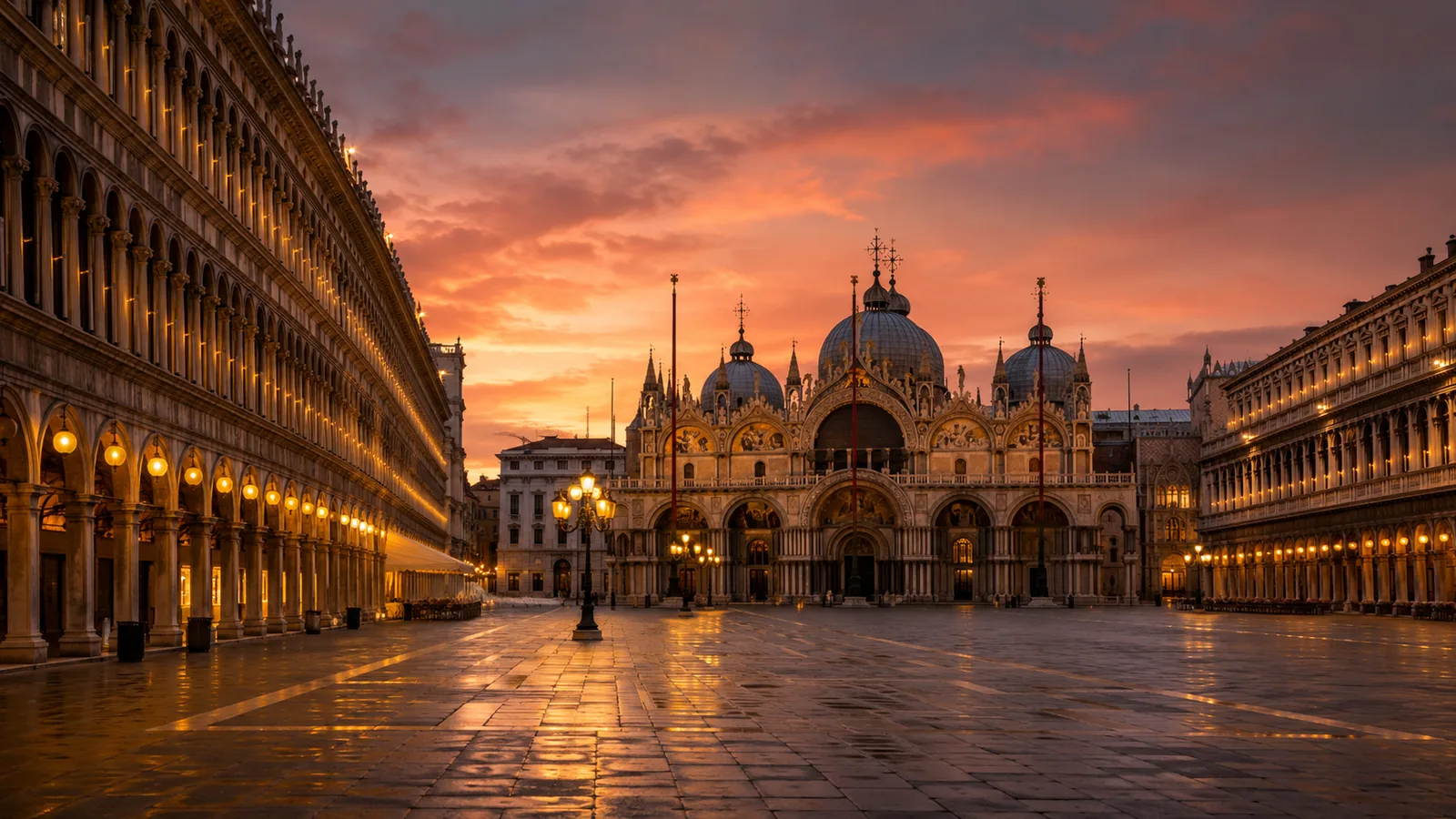
Season by month: what to expect
November–December. Quiet. 15–20 degrees Celsius. No cruise ships; tourists are light. The mosaics are lit best mid-morning. This is the Venetian secret season. Dress layers. January–February. Coldest and quietest. Acqua alta risk rises. Walkways are laid out (raised boards) when water floods the narthex; the basilica stays open. Tourist crowds are minimal. March–April. Spring arrives; day-trippers from Austria and Germany increase. Cruise ships return. Still under 20 degrees; Easter week surges with families. May–June. Summer season begins. Basilica fills 11:00 a.m.–15:00 p.m. Book timed slots weeks ahead. July–August. Peak season. Peak queue. Late-morning light is harsh. Cruise ships daily. Avoid unless you book the early morning slot or the last hour. September–October. Summer tail; still warm. Cruise ships thin out by late September. September 1–15 can be as crowded as August.
Time of day: the light and the crowd
9:00–10:00 a.m. First light, fewest tourists, cool air. Mosaic light is soft. This is the golden slot if you want quiet; book it on GetYourGuide. 11:00 a.m.–14:00 p.m. The basilica switches on the interior lights. This is when the mosaics glow. The crowds also peak here (11:00 a.m.–15:00 p.m. on summer days). A trade-off. 15:00–close. Afternoon light hardens. Last hour (one hour before closing) is often quiet and golden. Bring a sweater; the basilica holds the morning cool even in August.
Cruise ships and the Port of Venice
Check the Venice cruise-ship calendar (easily found online) before you book. On days when multiple ships dock, the basilica queue can double or triple in minutes (10:00–13:00). If you’re a cruise passenger with a short shore day, book the very first morning slot. If you’re staying multi-day, visit the basilica the day before or after the cruise surge.
Acqua alta (high water) and winter flooding
November through March, especially during new moons and spring tides, the Adriatic can push seawater into Venice’s streets. The basilica sits at the lowest point of the Piazza. When acqua alta occurs, seawater seeps into the narthex (the entrance hall). The basilica does not close; instead, temporary raised wooden walkways are deployed. You see the water, you walk on the boards, and you proceed upstairs to the nave (which is not flooded). It is surreal and memorable. Not dangerous, just wet underfoot. Plan for wet shoes if you visit during a flood event. The basilica publishes acqua alta forecasts online.
Late morning in November is unbeatable: the mosaics are lit, the air is 15 degrees, and the crowd is a quarter of August. Spend a little more on a hotel for a quieter night. It is worth it.
Check the calendar and book three weeks ahead
Early morning and low season are cheapest and quietest. Peak summer requires advance booking.
Frequently asked questions
Is August really that busy?
Yes. Late morning to mid-afternoon, the basilica is at capacity. The queue forms by 11:00 a.m. and runs 30–60 minutes. If you must visit in August, book the very first slot. Otherwise, go November–March.
What is acqua alta?
High water. Winter storm surge pushes seawater into Venice and floods the streets. The narthex of the basilica gets wet; wooden walkways are laid out. The basilica stays open. It is not dangerous; wet shoes are the only consequence. The basilica publishes forecasts.
When are the mosaics best lit?
11:00 a.m.–14:00 p.m., when the basilica switches on interior lights. Outside those hours, the light is softer but less golden. Late morning (11:00–12:00) is ideal. Avoid 9:00–10:00 a.m. if you care about seeing the mosaics shine.